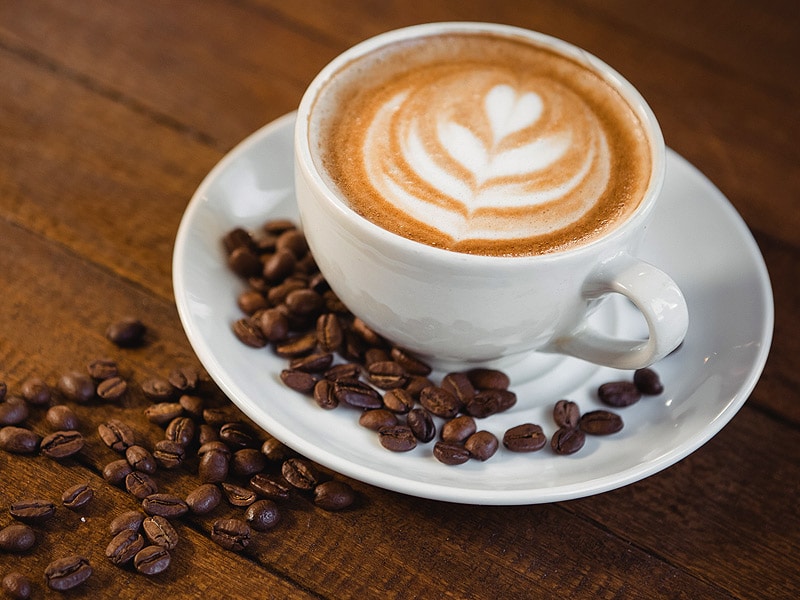
Everyone likes espresso coffee. Whatever we do to make our mug of joe in the house, absolutely nothing appears to compare to an attractive, strong, crema-topped espresso, which we get in our favorite cafe. But would not it be great to be able to make this wonderful beverage at home?
Follow the link for the full article how to make espresso at home.
The process for just how to make espresso could be challenging. There is quite a whole lot that enters into effectively preparing this divine mixture. Learn just how to make espresso with an espresso machine. Modify and troubleshoot your caffeinated drink for the perfect shot. So without further ado, let's start it.
Describing 'Espresso' Coffee
The Cambridge English Thesaurus describes espresso as "a cup of bold coffee, made by pressing hot water through finely ground coffee and offered without milk."An espresso is a brief coffee drink, recognized for its strength, its tiny quantity, and the pressure that is involved in brewing it. Let's expand on this a little bit.
Understanding Espresso
The SCA gives us an extra detailed meaning:" Espresso is a 35ml, (1.2ounce), [× 2 for a double] beverage prepared from 7-9 grams (14-- 18 grams for a double) of ground coffee through which clean water of 195 °F - 205 ° F( 90.5 ° - 96.1 ° C) has been pushed at 9 - 10 bar of high pressure, and where the grind size is such that the brew time is 20-- 30 seconds".
Here the SCA not only offers us the interpretation, however likewise the recipe and the technique for brewing espresso. The most vital part of that explanation is the bit about pressure.
What Makes Espresso Different than Other Coffee?
The high pressure is what really defines espresso from other coffee drinks. Unlike various other methods of coffee brewing, such as filter coffee brewing, espresso is made with 9-10 bar of pressure. Brewing with pressure allows us to make coffee much more swiftly, and extract a lot more from the bean in a brief period of time.Tools of the Trade
Espresso deviceTo begin with, of course, you need an espresso appliance. Any machine that can creating 9 bars of pressure is adequate for brewing well-extracted espresso.
You must realize that inexpensive espresso machines are typically steam-driven, in contrast to pump-based. Steam-based espresso machines can not generate sufficient pressure to make commercial standard espresso.
Grinder
The next crucial piece of machinery is your coffee mill. Some baristas will even say that an excellent coffee grinder is more crucial than a good espresso machine.For exact work dimensions, coffee mills for espresso brewing should be burr grinders and not blade grinders.
Once more, you have to be cautious of less costly mills as they commonly can't grind coffee fine enough to brew espresso.
Portafilter
The portafilter is a metal filter with a heatproof manage. Inside the portafilter is a filter-basket, where the ground coffee goes.Portafilters without spout are called bottomless portafilters. These are more difficult to brew with precisely and also are typically operated by even more seasoned baristas.
Tamper
A tamper is an item with the same area as the portafilter head, which is utilized to press the ground coffee tightly and evenly into the portafilter.Good quality tampers are handheld, heavy, as well as are usually made of stainless steel with a wooden holder. More affordable tampers are made of plastic.
Many espresso devices com with a plastic tamper, which we advise changing.
Knock Box
A knock box is a container with a bar across the top of it, which holds the spent coffee grounds. After brewing, the port-filter is knocked against the bar and the used coffee puck falls into the knock-box.Pressure and extraction time
The pressure and brewing time are impacted by the grind size, the amount of coffee in the filter, and just how firm the coffee is tamped.Proper brewing pressure is within 9 and 10 bars. The ideal brewing time for espresso is roughly 25-35 seconds. If the pressure or the brew time are improper, one or more of the other variables will certainly need to be changed.
If you can not accomplish the right pressure for espresso yet you are complying with the other steps appropriately, there is an opportunity that your device requires a service. Business espresso appliances must be serviced every six months. Residential machines can last longer depending upon how much they're utilized. Cleaning your machine and maintaining it lowers the number of times you will need to service it.